
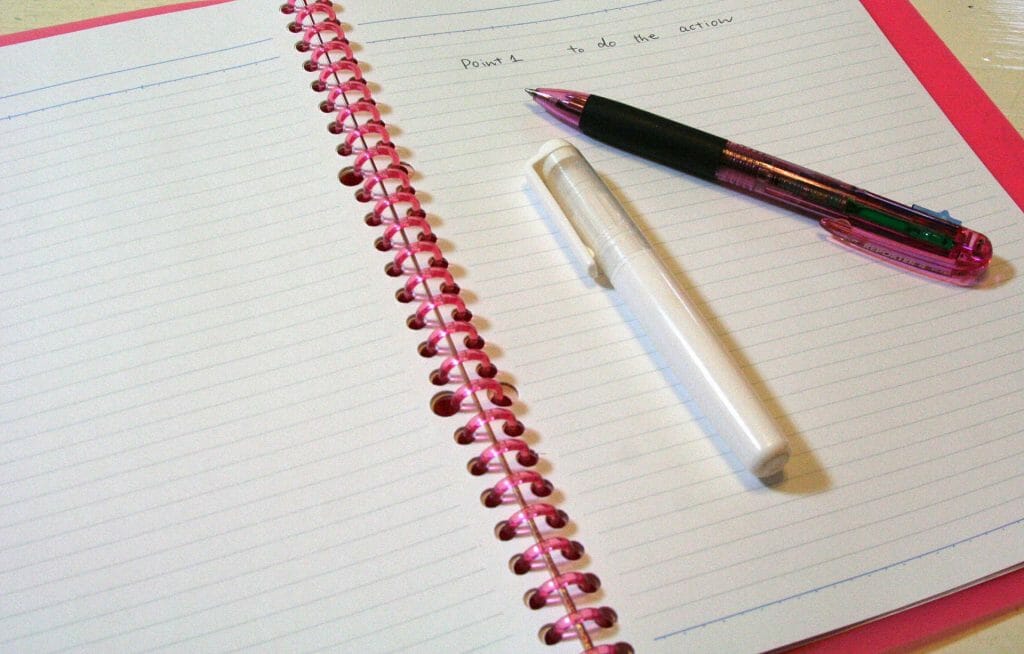
Do you use regular bound notebooks? When I was a student, I liked using loose-leaf notebooks.
The reason is that with regular notebooks, you usually end up having one for each subject, which makes your bag heavy.
With loose-leaf paper like the one in the photo, you can use tabs to organize notes from various subjects in a single binder. Plus, you can remove old sheets and leave them at home, which makes your bag lighter.
When writing, I would just pull out a single sheet, so I found that easier to write on. However
, loose-leaf paper has holes, so the individual sheets move around, and the downside was that the pages would rub against each other and get smudged by pencils.
1. The Inventor of Loose-Leaf Paper
Loose-leaf paper was actually invented in 1886 by a German man named Friedrich Seneken. (Note 1)
That’s surprisingly old. (Some sources cite 1854 (Note 2).) Later, a man named Richard Prentice Ettinger, who was studying tax law at Princeton University and working as a professor’s assistant, was tasked with publishing his professor’s book. While the first edition sold well, the law was amended before the second edition could be delivered.
If left as is, the book would still contain the pre-amended law, creating a discrepancy with reality.
So, he decided to separate the book into individual pages, punch holes in them, and bind them in a ring binder.
This allowed him to simply replace only the sections that had been amended. This became the world’s first loose-leaf book. (Note 2)
Loose-leaf systems at that time apparently resembled ring binders. Later, three-ring loose-leaf systems became the standard.
Advantages and Disadvantages of Loose-Leaf Binders
The main advantage of loose-leaf paper is that it allows for relatively easy replacement of content. In environments
where information changes rapidly, it is essential to constantly update and organize information. It was commonly used in places like hospitals
, wasn’t it? Updating, replacing, and organizing medical records—these were settings where the benefits of loose-leaf paper truly shone. (Note 2)
The disadvantage is that, precisely because pages can be easily swapped out, they are unsuitable for a scientist’s notebook. It would be a major
problem if pages were replaced later to tamper with the content. (Note 3)
Japan’s Unique Loose-Leaf System
When I was a student, I didn’t use three-hole ring binders; instead, I used loose-leaf paper like the one in the photo above, which had many more holes.
A5 has 20 holes, B5 (which I used frequently) has 26 holes, and A4 has 30 holes, apparently. There are two slightly larger holes
in the middle to accommodate two-hole binders.
However, this type of loose-leaf paper seems to be unique to Japan.
Japan has a very well-developed loose-leaf binder market, with binders, paper, and accessories made by all the major manufacturers, such as Kokuyo, Maruman, Lihit Lab, and others. We call it the Japanese Binder System, JBS, or J-Binder. In our opinion, the J-Binder system is the most extensive in the world, offering the widest range of quality, prices, and accessories, and is a proven format that is here to stay.
A major advantage of the J-Binder over other systems such as 3-ring, Arc, and Circa is the number of holes punched in the paper. A4 paper has 30 holes, B5 has 26 holes, and A5 has 20 holes.
(Note 4) (Note 5)
I came across this description:
“Japanese Binder System, JBS” and “J-Binder.” It seems that loose-leaf paper with so many holes is a unique feature
specific to Japan. I learned this for the first time while writing this article.
There used to be many different types of loose-leaf paper sold in Japan, didn’t there?
From regular notebooks to plain paper and music paper with five lines, there were various types available to suit different purposes.
However, we’re in the age of IT. Perhaps the role of loose-leaf paper is gradually diminishing.
Even in hospitals, they use electronic medical records and show X-rays on tablets.
Still, it feels a bit sad that the joy of binding, swapping, and managing notebooks by hand seems to be fading away.
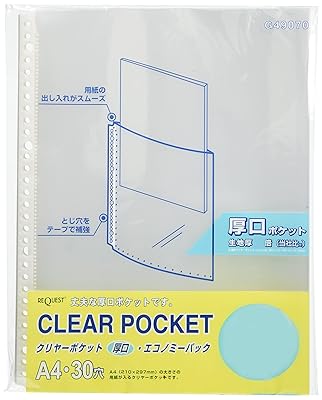
Right now, I’m using a loose-leaf binder with pockets for my hospital visit cards and other cards.
I use index tabs to organize my visit cards and other cards, keeping them in the pockets.
I think it’s also a great way to organize business cards I’ve received.
That concludes our look at the invention and evolution of loose-leaf paper, as well as its unique form specific to Japan.

 ポチップ
ポチップ
 ポチップ
ポチップ
 ポチップ
ポチップ
 ポチップ
ポチップ
 ポチップ
ポチップ
Most A6 planners have six rings, don't they?
They're like the old-style ring-bound planners.
 ポチップ
ポチップ
 ポチップ
ポチップ
Summary
The origins of loose-leaf paper date back to the 19th century. While loose-leaf paper is easy to swap out pages, it also has a downside: it can be tampered with.
Surprisingly, loose-leaf paper with multiple holes seems to be unique to Japan. That’s a bit surprising, isn’t it?
よろしければ応援お願いします


Reference Sites
(Note 1)


(Note 2)

(Note 3)

(Note 4)
(Note 5)


